
'...especially pressure on the rupee, the current account deficit, and foreign exchange outflows.' 'The key question over the next several months is whether the government can prevent external turbulence from feeding into domestic economic pessimism.'

The United States and Iran concluded the first phase of in-person talks in Islamabad, with both delegations exchanging written texts to formalise areas of understanding. The discussions, involving key representatives from both sides, are aimed at reducing tensions and exploring possibilities of a structured understanding.

The Directorate of Revenue Intelligence (DRI) has dismantled a major international gold smuggling syndicate operating through Kempegowda International Airport in Bengaluru, arresting five individuals and seizing a significant quantity of gold.

A potential agreement between the United States and Iran, including a comprehensive ceasefire and gradual lifting of US sanctions, may be announced soon, according to reports. The agreement aims to de-escalate tensions and establish a framework for resolving disputes.

The Indian government has increased import duties on gold and silver from 6 per cent to 15 per cent to curb inbound shipments of precious metals amid a rising import bill due to the West Asia crisis.

Sharp differences between Iran and the UAE over the West Asia conflict were on full display during the BRICS foreign ministers' meeting in New Delhi, signalling the challenges the bloc faces in reaching a consensus position on the crisis.
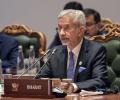
India has expressed serious concerns about the West Asia crisis and its potential impact on energy supplies and maritime stability, urging BRICS nations to find practical solutions to geopolitical challenges and unilateral sanctions.

US Secretary of State Marco Rubio arrived in Kolkata for a four-day diplomatic tour to India, marking the first visit by a US secretary of state to the city in 14 years. His itinerary includes meetings with Indian officials, energy talks, and a Quad Foreign Ministers Meeting.

'The situation globally is quite challenging, but we have the confidence and courage of conviction that we will come out winners even in this challenging time.'

Indian stock markets experienced a significant sell-off, with the Sensex tumbling over 1,300 points, driven by escalating crude oil prices due to US-Iran tensions and Prime Minister Narendra Modi's call for austerity measures, which amplified investor concerns about India's economic outlook.

It seems odd to criticise a country for delivering growth rates in standards of living and consumption that have been perhaps the fastest, longest, and most broad-based (affecting hundreds of millions of people) in history, points out Arvind Subramanian.

India emerged reasonably well from 2025. But now, the oil shock and war-related supply disruptions have again driven funds out of India and significantly weakened the rupee, points out Ajay Chhibber.

'If the war continue for a longer period of time, it is just a matter of time before the government will pass on some of the price increases.'

'Even last year, when India bought gold, the physical quantity was much less than the previous years.'

Petrol price has been increased by 87 paise in Delhi from Rs 98.64 to Rs 99.51 per litre. Diesel rates have gone up by 91 paise from Rs 91.58 to Rs 92.49.

US President Donald Trump will visit China from May 13 to 15 at the invitation of President Xi Jinping. The visit occurs amidst global tensions, including the war in West Asia and trade disputes between the US and China. Discussions are expected to cover China-US relations, world peace, and economic issues.
The Enforcement Directorate has reported a staggering 170 per cent surge in asset attachments, reaching 81,422 crore in the last financial year (FY26), underscoring its intensified efforts against financial crimes and its significant role in restituting funds to victims.
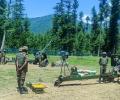
'India's security challenges are no longer confined to the Line of Control or the Line of Actual Control.'
'They also span cyber networks, economic systems, information warfare, technology ecosystems, maritime routes, and internal social cohesion.'

Chinese President Xi Jinping warned US President Donald Trump that mishandling the Taiwan issue could trigger conflicts between the two countries during wide-ranging talks on trade, Iran, and energy security.

Gold prices experienced a significant decline in futures trading due to uncertainty surrounding geopolitical tensions in West Asia and conflicting statements regarding the conflict. Investors are also awaiting key macroeconomic data for further direction on interest rate cuts.
'At the first sign of real trouble, that money will move. There will be a run.'

Pakistan has received the second and final tranche of USD 1 billion from Saudi Arabia, completing a USD 3 billion aid package aimed at boosting its foreign reserves, the state bank said.

Kannada film actress Ranya Rao is set to be released from Bengaluru Central Jail after a year of detention in a gold smuggling case.

Commodity markets, especially the metals, are among the most volatile segments of the Indian financial ecosystem. To traders involved in commodity trading, it is not only helpful to keep track of the daily price changes but also necessary to make informed trading decisions. Commodities like gold, silver, copper, and aluminium react to many different factors, which makes it imperative for commodity traders to watch out for metal prices every day.

Enforcement agencies have highlighted risks related to money laundering and terror financing, prompting closer scrutiny of crypto platforms operating in India.

Iran has presented a multi-layered proposal to the US in an attempt to break the deadlock in peace talks, focusing on de-escalation and nuclear programme discussions.

Vietnam is an emerging regional power and a closer relationship with Hanoi is closely aligned with Prime Minister Narendra Modi's Act East Policy, points out Dr Rajaram Panda.

Prime Minister Narendra Modi will visit the UAE, the Netherlands, Sweden, Norway and Italy to deepen India's bilateral ties amid geopolitical changes.

India should not stay on the margins of this initiative. There should be a serious debate about what would be in India's best interests asserts former foreign secretary Shyam Saran.

The Enforcement Directorate (ED) reports a decline in traditional financial crimes due to sustained investigative actions and government initiatives, while highlighting emerging challenges like cryptocurrency fraud and terror financing.
Moody's Ratings has downgraded India's growth forecast for financial year 2026-27 (FY27) to 6 per cent from 6.8 per cent, attributing the revision to weaker consumption and industrial activity, elevated energy prices, and rising input costs stemming from the West Asia conflict.
The World Bank has affirmed India's strong position to withstand the current global energy shock, citing high foreign exchange reserves, fiscal space, and low inflation as key buffers supporting continued growth despite international headwinds.
The Reserve Bank of India (RBI) has projected that crude oil prices will average USD 85 per barrel and the rupee will weaken to 94 against the dollar by FY27, according to its bi-annual Monetary Policy report.

Pakistan's skewed foreign reserves got a major boost after Saudi Arabia pledged an additional $3 billion in deposits while extending its existing $5 billion facility for a further three years.

Lionel Messi faces a lawsuit in Miami alleging breach of contract and fraud after missing an Argentina friendly central to a multimillion-dollar promotional deal.
We, Indians, forgot that for Pakistan, Kashmir dispute and blood feud with India is the raison detre for its existence. It is also the excuse with which the Pak army keeps its grip over the state. Peace in Kashmir and between India and Pakistan is against the interests of the Pak army, points out Colonel Anil A Athale (Retd).

'It was diminishing even before Trump came to power.' 'The US was at the centre of the global economy. That position is going to become less and less important and less central.'

'Nepal today is far more aware, self-confident, aspirational, and assertive.' 'India's policy so far has not been geared to this shift. It is time to redraw our Nepal strategy.'

"It is quite possible that the rates will remain low in the near to medium term, but that will depend on how conditions evolve," said RBI Governor Sanjay Malhotra.

In the present hyper-connected world, there are many domestic and global factors that affect financial markets. Of them, the most powerful and often least predictable are geopolitical events, which often boil down to one diplomatic headline.
 © 2026 Rediff.com - Advertise with us - Disclaimer - Privacy Policy - Sitemap - Feedback - About us - Terms of use - Grievances